
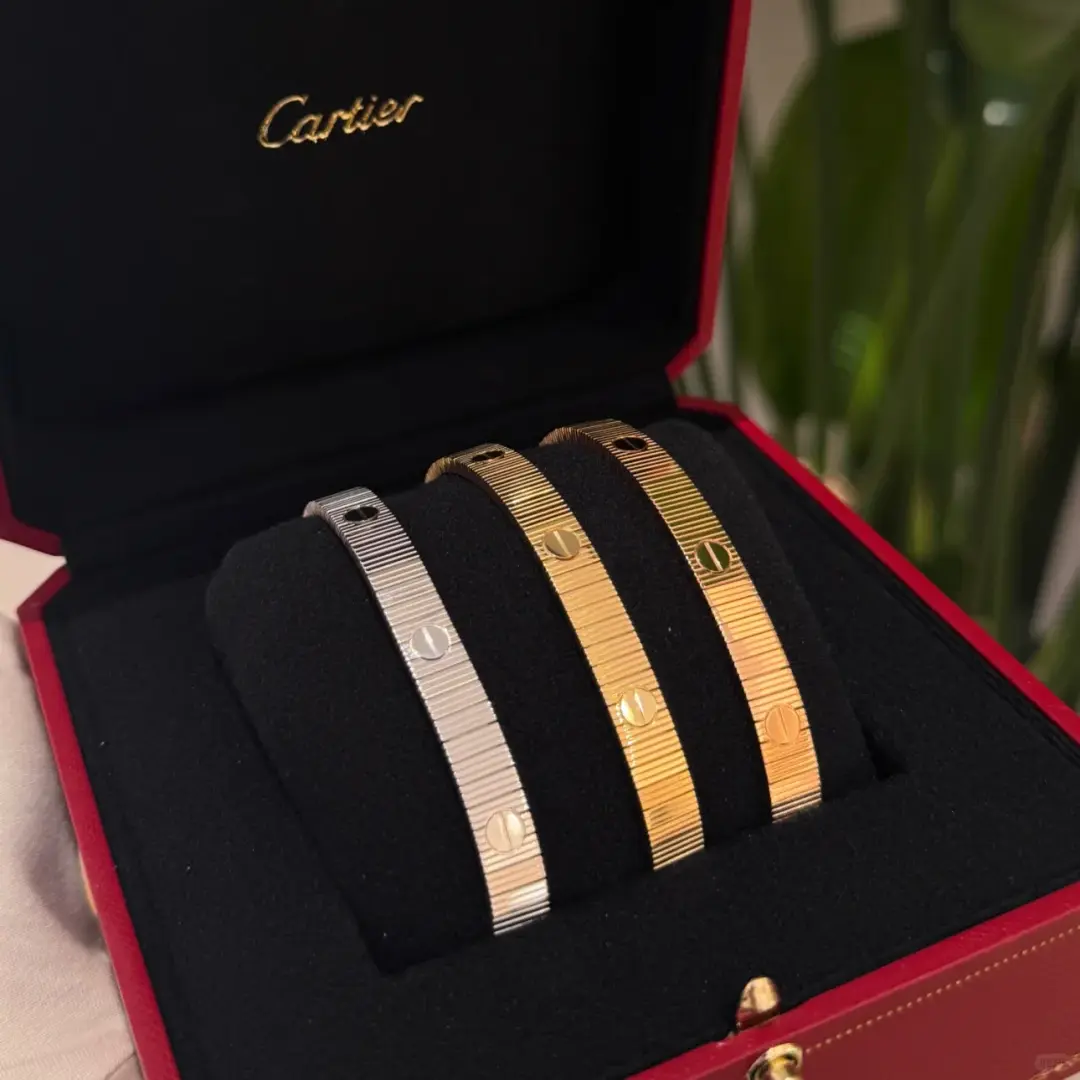
High-end jewelry replication is a complex process that requires careful craftsmanship, detailed research, and continuous refinement. At Anylovey and Alllovey, our goal is not simply to reproduce the appearance of a piece, but to study and refine the structural details that define luxury jewelry craftsmanship.
Developing high-quality jewelry inspired by iconic designs involves multiple stages of research, engineering, and manufacturing.
1. Studying Reference Pieces
The first step in developing high-end jewelry is studying reference pieces. Our design team carefully analyzes jewelry obtained through different professional channels, including secondary markets, collectors, and authorized sources when available.
By examining physical pieces, our team can understand important elements such as proportions, stone placement, metal thickness, and overall structure. Many of these details are difficult to capture through photographs alone, which is why physical reference pieces are essential for accurate development.
This stage allows our designers to build a precise technical understanding of the design.
2. Digital Modeling and Design Engineering
Once the reference piece has been studied, the design is translated into a digital model using professional CAD jewelry design software.
This step allows our engineers to reconstruct the structure of the jewelry piece while optimizing it for manufacturing. Small adjustments may be made to improve durability, stone security, or comfort when worn.
Digital modeling also allows us to test proportions and refine structural balance before the piece enters production.
3. Prototype Development
After the CAD model is completed, a prototype is produced. This stage allows our team to evaluate the piece in real physical form.
During prototyping, several aspects are carefully checked:
-
Overall proportions
-
Stone alignment
-
Weight balance
-
Comfort when worn
-
Structural strength
In many cases, the prototype goes through multiple rounds of adjustments before it meets our quality standards.
4. Craftsmanship and Stone Setting
Once the prototype is approved, the piece enters the production stage.
Our artisans focus on the craftsmanship details that define fine jewelry, including:
-
precise stone setting
-
smooth metal finishing
-
symmetrical alignment
-
balanced proportions
Stone setting is one of the most critical stages of jewelry production. Proper alignment and secure setting ensure both durability and visual brilliance.
5. Continuous Refinement
Jewelry production is not a one-time process. Even after a design enters regular production, our team continues to refine small details.
Adjustments may be made to improve polishing techniques, metal finishing, or stone setting precision. Over time, these improvements allow each production batch to become more refined.
This commitment to continuous improvement is one of the reasons many of our customers return to us.
Why Craftsmanship Matters
High-end jewelry is defined by its details. Small differences in proportion, stone placement, or finishing can dramatically affect the overall appearance of a piece.
By combining detailed research, professional design engineering, and experienced craftsmanship, we aim to deliver jewelry that reflects the precision and elegance associated with fine jewelry.
At Anylovey and Alllovey, we believe that careful development and constant refinement are the foundation of high-quality jewelry.